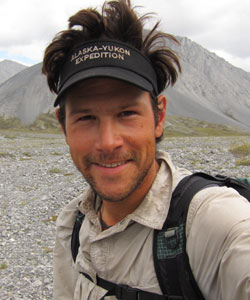
Roger J. Wendell
Defending 3.8 Billion Years of Organic EvolutionSM

From the Sierra Club's Rocky Mountain
Chapter Peak & Prairie publication
Volume XXIII, Number 2, April/May 1998, page 23
by Roger J. Wendell,
Rocky Mountain Chapter Outings Chair

|
Click Here for my First Aid information at the bottom of this page... |

|
Click Here for my Backcountry Survival page... |
|
|
Click Here for my page on Lightning Safety... |
|
|
Click Here for my Bear Safety page... |
Back in the late 1990's and early 2000's I was a webmaster (with Charlie Oriez and others) for the Sierra Club's Rocky Mountain Chapter in Colorado. At that time I created a number of their webpages, related to the outdoors, in addition to writing a few articles for their state publication and group newsletters. Below is much of what I wrote, back then, about the Ten Essentials. However, times (and technology) changed so I have since updated this list a little. Because more change is inevitable be sure to update yourself on the latest techniques and equipment needed in the backcountry. So, enjoy what I've posted here (and mostly wrote in the late 1990s) but please study the latest materials (from other sources) for not only your own safety, but also to help keep animals and the natural environment as undisturbed as possible.
As the Chapter's new outings Chair, I encourage, almost insist, that we spend more time with nature. I hope to devote future articles to destinations, low impact techniques, and the interesting experiences to be found outdoors. First, we need to look at some basic safety items that should be included in every daypack. Each member of any outing should always carry at least these basic items in case of an emergency. (Remember, reading a short essay like this is not sufficient preparation for an outdoor experience.)
©Copyright 1998 Roger J. Wendell
My thoughts about the use of a GPS are evolving...
In his book, The Ultimate Hiker's Gear Guide (Tools & Techniques to Hit the Trail) Second Edition (pp. 132-133)
Andrew Skurka had this to say about GPS Units (and I'm in general agreement):
"Many people seem surprised that I can expertly navigate through the wilderness without relying on a GPS (which stands for 'global positioning system') unit. These devices can:
- Show my exact location, to an accuracy of a few feet;
- Calculate the distance and direction to key landmarks, like my car, a hot fishing hole, or a trail junction;
- Determine how far, how fast, and in which direction I've hiked; and
- Record a track on my route that I can share or use when I get home."
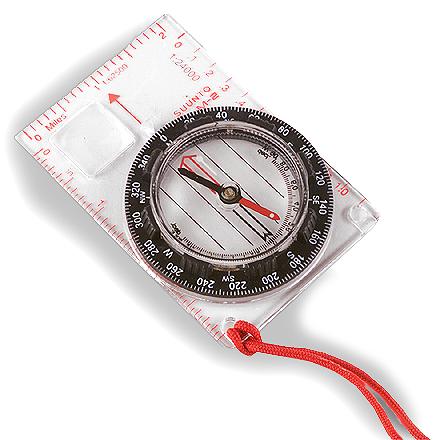
But these functions do not make a GPS a killer app. I can do exactly the same thing with a topo graphic map, altimeter watch, magnetic compass, and pen. Furthermore, a GPS cannot replace map reading skills, especially for off-trail navigation. A GPS can tell me the straight-line distance and direction to a landmark, but it cannot tell me the line of least resistance to get there. That straight line might take me through the thickest brush, into a deep canyon, or across the river at its deepest point."My stance on GPS units has evolved since I wrote the first edition of this guide. I now consider it an ace in my sleeve for when my standard tools reach their limits. First, on a GPS I can store maps and imagery of the areas surrounding my intended route, for which I don't have paper maps. Second, a GPS offers unrivaled speed and certainty."
Pretty darn good job, Rog.My $.02:
I think individuals need to know and understand that whether you're on a CMC trip, or a trip guided by an AMGA mtn guide, out alone, or with friends out cragging, backcountry skiing, accidents are bound to happen.
The final decision as to your own personal safety resides with you the individual. Peer pressure to get to the top, keep going when a storm approaches, etc plays a huge part in mtn safety. The individual has to trust his gut once in a while and say 'this doesn't feel right.'
I mentioned the AMGA guide above, because last year a guide had a group out on a couloir snowfield all roped together, and he failed to drive in any snow pickets. Up, up, up they all went until ... He fell, dragging his group hundreds of feet down the mountain. There were injuries.
One or two incidents showing poor leadership decisions can certainly give the club, mountaineering, organizations a black eye, when in fact, 99% of the trips are safe and sound.
Great job keeping safety up on your site.
Lar
Whistle Protocol
(as recommended by the Colorado Mountain Club, circa 2020)

A whistle is one of the Ten Essentials CMC recommends its members and guests carry at all times while hiking, backpacking, skiing, snow shoeing, climbing. A whistle is a tool used to communicate to others in situations where human shouts cannot be heard. Although three blasts on a whistle are recognized as HELP, there is no standardized response to let the initiator know he/she has been heard and response is on the way. The Denver Safety & Leadership Committee (DS&L) has developed a Whistle Protocol designed to be simple and effective for our leaders and members to initiate and respond in specific situations where the human voice may not be heard. This matrix can be cut out and taped onto a water bottle with transparent packing tape which will somewhat protect the paper from moisture. In order to communicate in an emergency the whistle is to be worn on the outside of a backpack or day pack.


I am not a first aid expert - I encourage everyone to take Red Cross training or a Wilderness First Aid course! I, myself, have undertaken these kinds of courses with the Coast Guard, Postal Police, Sierra Club, and the Colorado Mountain Club.
Despite years of this kind of training I still find it difficult to remember all of the procedures so I usually carry a reminder card with me while away from my regular urban environment. In addition to the notecard, I carry a first aid kit in my car and in my backpack. Listed below are a wide range of items that experts suggest we carry in our first aid kits. I don't carry all of these items and, the items I do carry sometimes change by season or the type of terrain or adventure I'll be in. Note, the numbered bullets do not designate a priority - they're there to help you sort through the data!
First Aid Kit:
|
|
Links:
|
| Warning! Climbing, mountaineering, and backcountry skiing are dangerous and can seriously injure or kill you. By further exploring this website you acknowledge that the information presented here may be out of date or incorrect, and you agree not to hold the author responsible for any damages, injuries, or death arising from any use of this resource. Please thoroughly investigate any mountain before attempting to climb it, and do not substitute this website for experience, training, and recognizing your limitations! |
 Back to Roger J. Wendell's Home Page...

Abbey |
About |
Blog |
Contacting
Me |
Copyright |
Disclaimer |
Donate |
Guest
Book |
Home |
Links |
Site
Index |
Solutions |
Terms,
Conditions
and
Fair
Use |
What's
Changed
or
New?
Copyright
© 1955 -